Where Bright Ideas
Come to Life!
Come to Life!
If you’ve ever had a storage heater, immersion heater or electric panel heater installed — or you’re planning one — there’s a cable running behind that appliance that most people never think twice about. That cable is doing a job that standard wiring simply cannot do safely. Getting it wrong is one of the most common electrical faults we find in older properties across Tonbridge, Tunbridge Wells, Sevenoaks and Crowborough.

This article explains heat-resistant cable — specifically rubber-insulated and butyl rubber cable — what they are, why they exist, where they’re used, and what happens when the wrong type has been installed, or when heat-proof wiring from decades ago is now well past its best.
This article is about modern heat-resistant rubber and butyl rubber cable — cable specifically designed for use with heating appliances. It is NOT about VIR (Vulcanised India Rubber) wiring, which is a completely different thing and is covered separately on this website.
VIR — Vulcanised India Rubber — is an old wiring type used in UK properties from the Victorian era through to around the 1960s. If your property has VIR wiring, that’s a whole-house concern about ageing electrical infrastructure. It is not a question about appliance connections. We cover VIR wiring in its own dedicated article in the Knowledge Centre.
The cable discussed in this article is something different: modern heat-resistant rubber and butyl rubber cable, purpose-made to current specifications, sold today and used by electricians specifically for connecting storage heaters, immersion heaters and other heat-generating appliances. The two types share rubber as a material — and that’s roughly where the similarity ends.
In practical terms, they look different too. Old VIR cable tends to have a black outer sheath, often wrapped in a fabric braid, and in older installations the rubber has usually hardened and cracked beyond recovery. Modern heat-resistant butyl rubber cable has a brown or orange-brown sheath with a dense, matte texture. A qualified electrician will distinguish them immediately. If you’re a homeowner or landlord and you’re not sure which you’re looking at — that’s exactly the right reason to call us.
Why does the distinction matter for this article? Because in older properties — particularly the Victorian, Edwardian and interwar housing stock we work on regularly across Tonbridge and Tunbridge Wells — you can find both in the same building. VIR in the fabric of the original wiring, and modern heat-resistant rubber flex installed more recently at a heating appliance. They need to be treated very differently.
Every cable has two jobs: carry current safely, and insulate that current so it doesn’t go somewhere it shouldn’t. The insulation is the outer sheathing and the coating around each individual conductor inside.
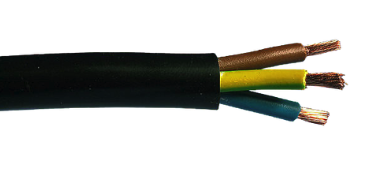
Most domestic wiring uses PVC insulation — the white or grey plastic on standard twin and earth cable. PVC is excellent for normal applications. It’s tough, flexible and rated to around 70°C, which is more than adequate for lighting circuits, ring mains and socket circuits where cable temperatures stay well within that limit.
The problem is that heat-generating appliances don’t play by those rules. When cable runs into or directly alongside an appliance that produces sustained, intense heat — an immersion heater, storage heater or electric water tank — the cable itself heats up not just from the current flowing through it, but from the external heat source. Immersion heater connection points can reach temperatures well above 70°C. Storage heater casings radiate significant heat continuously during overnight charge cycles.
In those environments, PVC insulation starts to soften. Over years it becomes brittle, cracks and can shrink back from terminals. In the worst cases it fails completely — leaving exposed live conductors inside a hot appliance. That is a fire risk, a shock risk and a failed EICR waiting to happen.
Heat-resistant cables solve this by using insulation materials that withstand much higher sustained temperatures without degrading. The two types most commonly used by electricians in Kent for domestic and light commercial heating work are rubber-insulated cable and butyl rubber cable.
Modern rubber-insulated heat-resistant cable — not to be confused with old VIR wiring — uses vulcanised synthetic rubber compounds that tolerate significantly higher temperatures than PVC while remaining flexible even when hot. That flexibility matters in tight spaces around heaters and cylinder cupboards.
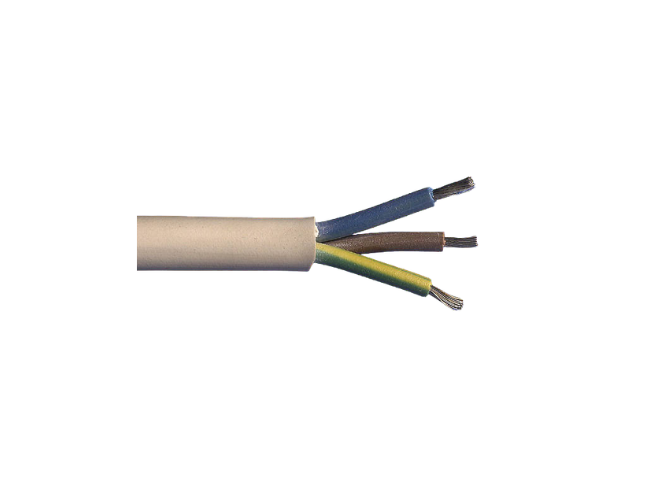
It’s most commonly used as a two-core or three-core flexible cable for the final connection between a fixed heating circuit and the appliance itself, and is often referred to as heat-resistant flex or rubber flex. Typical rubber-insulated cable is rated to around 85°C continuous operating temperature — a significant margin above PVC — giving a much safer working range at immersion heater connection points and inside storage heater casings.
One important consideration: modern rubber cable has a lifespan, and it ages differently to PVC. In a sustained hot environment, rubber that has been in place for 20, 30 or 40 years will eventually harden and crack. It doesn’t melt the way degraded PVC does, but its insulation integrity breaks down over time. If you’re in an older property across Tonbridge or Tunbridge Wells and the immersion heater wiring has never been touched, there’s a real chance that cable is in poor condition — even if the heater itself has been replaced more recently.
Butyl rubber is a synthetic rubber compound, and it’s the cable type Bright Spark specifies as standard for fixed wiring to heat-generating appliances across our work area in Kent. It offers a higher temperature tolerance than standard rubber and handles sustained heat cycles exceptionally well over a long service life.
Each conductor is individually insulated with the butyl compound, and the complete cable has an additional outer sheath. This double layer of protection means that even in demanding conditions — inside a storage heater casing in Crowborough, directly connected to an immersion heater element in Sevenoaks, or powering a hard-wired panel heater in Tunbridge Wells — the cable maintains its integrity over many years.
Butyl rubber cable is available in the following specifications most commonly used in domestic and commercial heating circuits:
Visually, butyl rubber cable is distinct from standard PVC twin and earth. The sheath is typically brown or orange-brown, and the insulation has a denser, matte texture rather than the smooth plastic finish of PVC. It also looks and feels very different from old VIR cable, which is typically black, heavily degraded in older installations and often wrapped in fabric braid. If you’re ever unsure what cable you’re looking at, ask a qualified electrician — don’t guess.
Here’s where this matters in the average home or commercial property across Kent, and what we look for when carrying out EICR inspections in Tonbridge, Tunbridge Wells, Sevenoaks and Crowborough.
Immersion Heaters and Hot Water Cylinders
This is the most common application we encounter. The immersion heater element screws directly into the hot water tank and heats water to 60°C or above. The connection point — where the cable meets the heater head — sits right at the top of the tank surrounded by heat. Standard PVC cable at an immersion heater connection is not compliant and will not pass an EICR. Heat-resistant cable must be used from the connection point back to a safe distance from the heat source at minimum. In most installations across Tonbridge and Tunbridge Wells, we run butyl rubber cable for the full circuit from the consumer unit or fused spur to the heater.
Storage Heaters
Traditional storage heaters — the ceramic brick type that charges on Economy 7 or off-peak overnight electricity — get very hot internally, storing heat and releasing it throughout the day. The cable connection must tolerate the heat radiated from the casing, which is why heat-resistant flex or butyl cable is required for the final connection and ideally throughout the full circuit. Modern storage heaters are better insulated than older designs, but the cable requirement is the same.
Electric Panel Heaters (Fixed)
Fixed electric panel heaters — the slim wall-mounted type increasingly replacing older storage heaters in Kent properties — don’t reach the internal temperatures of traditional storage heaters, but many manufacturers specify in their installation instructions that connections must be made with heat-resistant flex. Using standard PVC flex in those circumstances can void the appliance warranty and creates a non-compliant installation.
Electric Towel Rails (Hard-Wired)
Hard-wired electric towel rails in bathrooms across the properties we work on in Sevenoaks and Crowborough require heat-resistant connections at the rail itself. This detail is sometimes skipped in older or less carefully executed installations — it’s something we check during EICR inspections.
Commercial Properties, Care Homes and Offices
In light commercial settings across Kent — care homes, offices, small manufacturing units, storage facilities and garden maintenance companies — the same requirements apply around fixed electric heating, commercial hot water and heat-generating processes. Care homes in particular often have multiple storage heaters, commercial-grade hot water cylinders and fixed heating in communal areas. Correct cable specification in those environments is both a safety matter and a compliance requirement.
If your property is 30 or more years old and the wiring to heating appliances has never been inspected, this section matters — particularly for homeowners and landlords across Tonbridge, Tunbridge Wells, Sevenoaks and Crowborough.
An Electrical Installation Condition Report — the formal inspection required every five years for rental properties and recommended for owner-occupied homes — includes full assessment of fixed wiring to heating appliances and hot water circuits.
Heat-affected cables in poor condition are typically coded C2 (potentially dangerous) or C1 (immediately dangerous) on an EICR report. Either means the report cannot be issued as satisfactory. For landlords with rental properties across Tonbridge, Tunbridge Wells, Sevenoaks and Crowborough, a failed EICR has direct legal implications under the Electrical Safety Standards in the Private Rented Sector (England) Regulations.
Remedial work is usually straightforward: replace the affected cable with correctly-rated butyl rubber or heat-resistant material, make good the connections, and retest. In most properties it’s not a major job, but it must be carried out by a qualified, NICEIC-registered electrician and certified under Part P.
At Bright Spark, we carry out EICR inspections across Kent and complete remedial work on the same visit where possible, minimising disruption for homeowners, landlords and tenants.
No — and this is not a grey area.
Standard PVC-insulated cable in a high-heat environment is non-compliant under BS 7671 (the IET Wiring Regulations). Regulation 522.2 specifically addresses the selection of wiring systems where external heat sources are a factor. Using the wrong cable type is a code violation, it won’t pass inspection, and it creates genuine fire and shock risk.
We regularly find this on properties where previous work was done by someone cutting corners — standard white PVC twin and earth running directly into an immersion heater, visibly softened and discoloured around the connection. It gets picked up immediately on EICR inspection. The fix is straightforward, but it should never have been installed that way.
If you’ve recently bought a property in Kent and you’re not sure what cable type is running to your heating appliances, an EICR will give you the full picture. We cover Tonbridge, Tunbridge Wells, Sevenoaks, Crowborough and the surrounding area.
Is heat-resistant rubber cable the same as the old rubber wiring in a 1950s house?
No. Old rubber wiring from the 1950s and earlier is VIR — Vulcanised India Rubber — a legacy cable type now considered life-expired and potentially dangerous. Modern heat-resistant rubber and butyl rubber cable is a current, compliant product made to present-day standards. If you have an older property and you’re uncertain what you’re looking at, get it inspected. We cover VIR wiring in a separate article in the Knowledge Centre.
How do I know if my immersion heater has the right cable?
Have an NICEIC-registered electrician inspect it. The things to look for are: sheath colour (butyl rubber is typically brown or orange-brown, not white), texture (matte and dense, not smooth PVC), and condition. If the cable going into your immersion heater is standard white twin and earth, or looks discoloured and brittle, it needs attention.
How long does heat-resistant cable last?
Well-specified butyl rubber cable installed correctly in a heating circuit should last the life of the installation — typically 25 years or more. Standard rubber flex used as a final connection has a shorter practical lifespan in very hot environments and should be checked periodically in properties over 20 years old.
Do you cover Tonbridge, Tunbridge Wells, Sevenoaks and Crowborough?
Yes. Bright Spark Electrical Services covers the full 25-mile radius across Tonbridge, Tunbridge Wells, Sevenoaks, Crowborough and surrounding villages in Kent. Whether you need a new immersion heater installed with correct butyl rubber cabling, an EICR inspection, or remedial work on wiring that has been flagged as non-compliant, we can help.
Whether you’re installing a new immersion heater, replacing a storage heater, fitting a hard-wired panel heater, or having older wiring inspected, the cable specification matters. It’s not the most visible part of the job, but it’s fundamental to long-term safety and compliance.
At Bright Spark, we specify heat-resistant butyl rubber cable as standard for all fixed heating and hot water circuits across our work in Tonbridge, Tunbridge Wells, Sevenoaks, Crowborough and throughout Kent. It costs marginally more than standard cable, but the alternative — revisiting an installation because the wrong cable was used, or dealing with a fault caused by degraded insulation — isn’t something we’re willing to put our customers through.
If you’re not sure what’s behind your storage heaters or running into your immersion heater, an EICR will give you a clear picture. Or if you’re planning a new installation and want it done correctly first time, give us a call.
Bright Spark Electrical Services — NICEIC Registered Electricians
Tonbridge | Tunbridge Wells | Sevenoaks | Crowborough | Kent
01892 531 728 | karen@brightsparkelectrician.co.uk | www.brightsparkelectrician.co.uk
Part P Registered | NICEIC Approved Contractor | Electrical Safety Register
You just saved us the biggest headache ever; after months of electrical problems ( now resolved), we had a ‘no power situation’. After checking circuit boards, switches etc we were at a complete loss. Read your piece above (after Googling ‘circuit board switches up, but no power‘) about RCD switch and resetting (didn’t know what an RCD was), and after 8 hours sleep dreaming of circuit boards and 2 minutes of contemplation, and re-reading your advice,I totally nailed it. Brilliant tutorial, many thanks. Susanne (I am neither young nor savvy with anything technical)
The two guys from Bright Sparks arrived promptly as arranged. Took their outdoor boots off before making their way to the job - a nice touch . Efficient, pleasant; I could not have asked for more. When the invoice arrived I was also pleasantly surprised. Overall a good experience 10/10
Thank you for attending my “Emergency Call out” there was smoke coming out of my socket. I telephoned at least 15 electricians after 7:15pm (in the evening) when we discovered the smoke coming out of the Socket. Their phones not even being answered. The next on my list was Bright Sparks, who were the only ones to answer the call - literally within a couple of rings, and was answered by a lovely lady who reassured me that help would be on the way. The Call was sent to your emergency electrician who called back within 15 minutes, and was able to attend within the hour, and fix the problem. Thank you. Excellent Service
Our timer on our central heating went and my husband was miles away at work,it was early evening when I phoned karen, but straight away she told me not to worry,to send a photo of the timer and she'd sort it out,and she did, an electrician came out with a new timer fitted it and was gone, brilliant service from start to finish, will definitely use them again and would highly recommend them
Very pleased with the Bright Spark team who installed a new Zappi EV charger and replaced our consumer unit. Many thanks for another job well done. Neat & clean. 10/10