
Where Bright Ideas
Come to Life!
Come to Life!
If you manage an older building — a church, a block of flats, a commercial property or a care home built before the 1990s — there's a reasonable chance you've got MICC cable somewhere in the electrical installation. You may have heard an electrician mention it during a fire alarm service visit. You may have seen it yourself — a dull silver metallic cable running neatly along walls or through ceiling voids, looking unlike anything else in the building.
This guide explains exactly what MICC cable is, why it was so widely used, what makes it difficult and expensive to work with, and what your options are when an existing MICC installation needs attention.
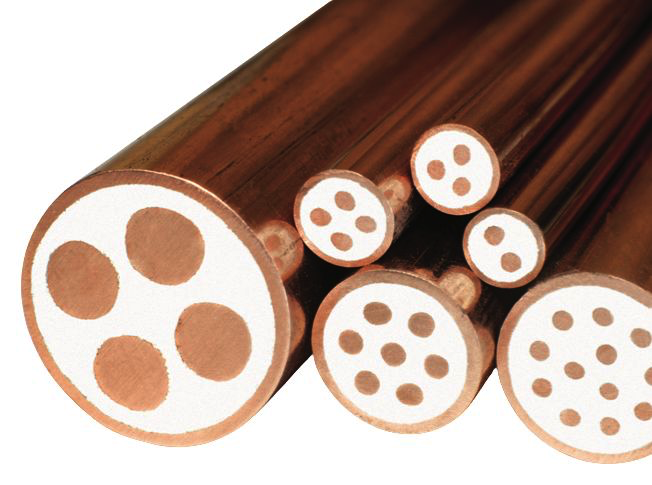
MICC stands for Mineral Insulated Copper Clad. It's a cable with a construction that's fundamentally different from any standard electrical cable you're likely to encounter. Rather than using plastic insulation around the conductors, MICC cable surrounds its copper conductors with compressed magnesium oxide powder — a mineral — all enclosed within a seamless copper outer sheath.
There is no plastic anywhere in the core construction of MICC cable. What you're looking at is essentially a solid metal tube containing copper conductors separated by tightly compressed mineral powder.
That construction gives MICC cable properties that no plastic-insulated cable can match. Magnesium oxide doesn't burn. Copper doesn't burn. In a fire, MICC cable will continue to carry current at temperatures that would destroy almost any other type of cable on the market. It's also completely waterproof, resistant to rodent damage, impervious to oils and chemicals, and extraordinarily durable.
MICC cable has a very distinctive appearance. The copper outer sheath gives it a dull silver-grey metallic look. It's rigid, relatively slim for the current it carries, and typically fixed with brass or copper saddle clips rather than the plastic clips used for standard cable. Once you've seen MICC cable, you'll always recognise it.

MICC cable was the industry standard for fire-critical electrical circuits from the post-war period through to the late 1980s and into the 1990s. It was specified for any circuit that needed to keep working in a fire — fire alarm systems, emergency lighting, sprinkler pump supplies, smoke extract fans. Because it lasts so extraordinarily well, a large amount of MICC cable installed during that period is still in service today.
The buildings where you're most likely to encounter MICC cable in Kent and the surrounding area include:
Churches and listed buildings — Many churches were wired with MICC cable for fire alarm and emergency systems from the 1950s onwards. Because the cable performs so reliably, much of it has never been replaced. If you're responsible for the electrical systems in a historic building, MICC cable is likely to be part of what you're managing.
Blocks of flats and residential communal areas — MICC cable was the standard specification for fire alarm wiring in residential blocks throughout the 1960s, 70s and 80s. Stairwells, corridors, plant rooms and communal areas in older residential blocks across Tunbridge Wells, Tonbridge, Sevenoaks and Crowborough frequently contain MICC cable that's been in continuous service for forty or fifty years.
Commercial and industrial buildings — Offices, factories, warehouses, schools and public buildings from the same era often used MICC cable for life safety circuits. Its resistance to oils, chemicals and physical damage also made it popular for power distribution in industrial environments beyond fire safety applications.
Care homes in older premises — Care homes operating from converted or older buildings frequently have MICC cable as part of their fire alarm infrastructure, often installed long before the building became a care setting.
This is where MICC cable creates significant challenges, and where building owners and facilities managers typically get an unwelcome surprise when electrical work is needed.
The mineral insulation in MICC cable — magnesium oxide — is highly effective when completely dry. The problem is that magnesium oxide is hygroscopic: it absorbs moisture from the atmosphere. And moisture conducts electricity. When the mineral insulation in MICC cable absorbs moisture, it bridges across the conductors inside, degrading insulation resistance and causing the circuit to develop faults.
Under normal circumstances, with the cable sealed and intact, this isn't a problem. The sealed copper sheath keeps atmospheric moisture out. But every time MICC cable is cut or terminated — every time an end is put on it — the mineral core is exposed to the air. That's why MICC cable terminations require specialist fittings that include a moisture-resistant seal. Without that seal, made correctly with the right equipment, moisture ingress over time will cause insulation faults that can be extremely difficult to locate and expensive to rectify.
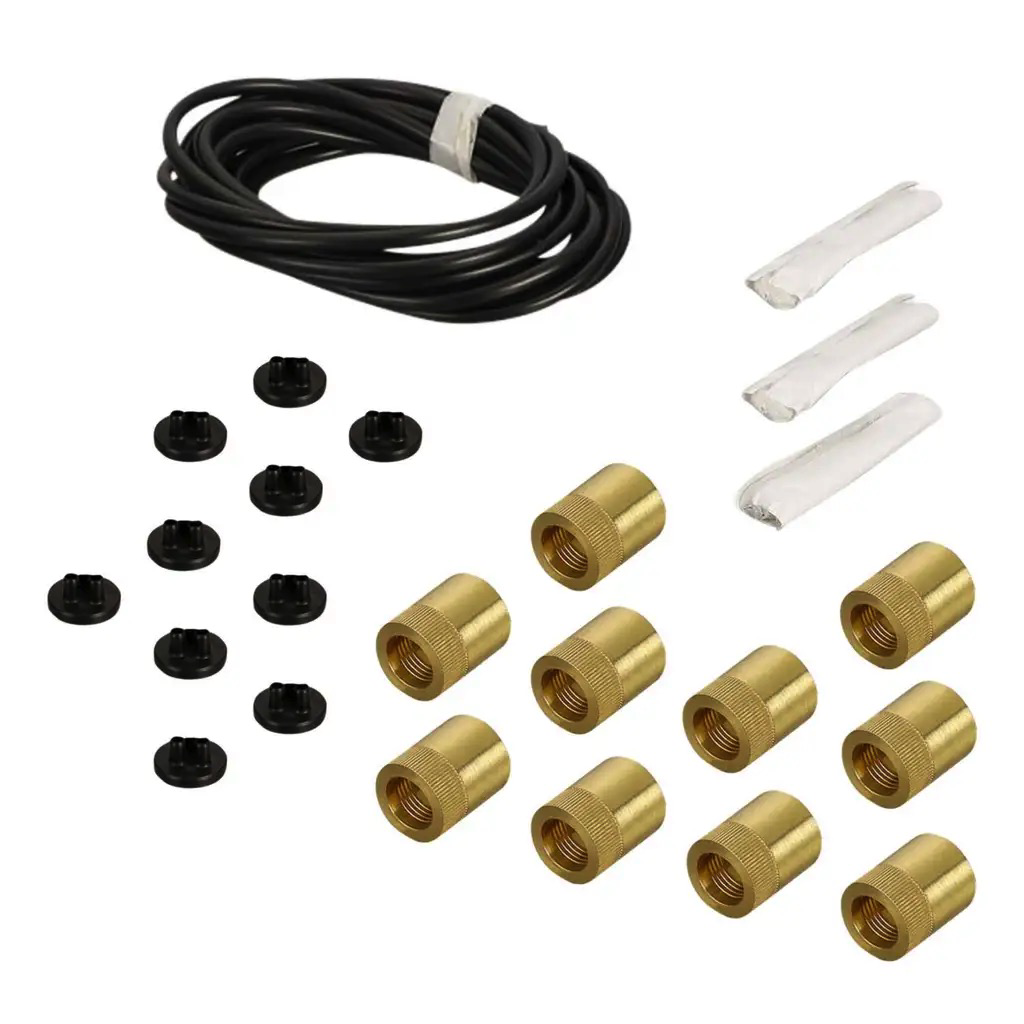
You cannot extend MICC cable like standard cable. Every joint and termination requires specialist compression glands, termination pots, and moisture seals. The process is time-consuming and requires specific tools and trained operatives who work with MICC cable regularly.
Fault-finding on MICC cable is difficult. If an older MICC cable installation has developed moisture ingress, the fault may not be at an obvious termination point. Moisture can enter through physical damage to the copper outer sheath, through a poorly made termination made years ago, or through gradual deterioration of an original moisture seal.
The skills are increasingly rare. The pool of electricians with regular, hands-on experience of MICC cable termination has been shrinking for decades. As MICC cable has given way to modern alternatives, fewer electricians encounter it regularly enough to maintain the confidence and precision the terminations require.
Cost is the compounding factor. MICC cable itself is significantly more expensive per metre than modern fire resistant cable. The specialist termination fittings carry a substantial cost premium. Labour takes longer. The total cost of MICC cable work can be two to three times the equivalent cost using FP200.
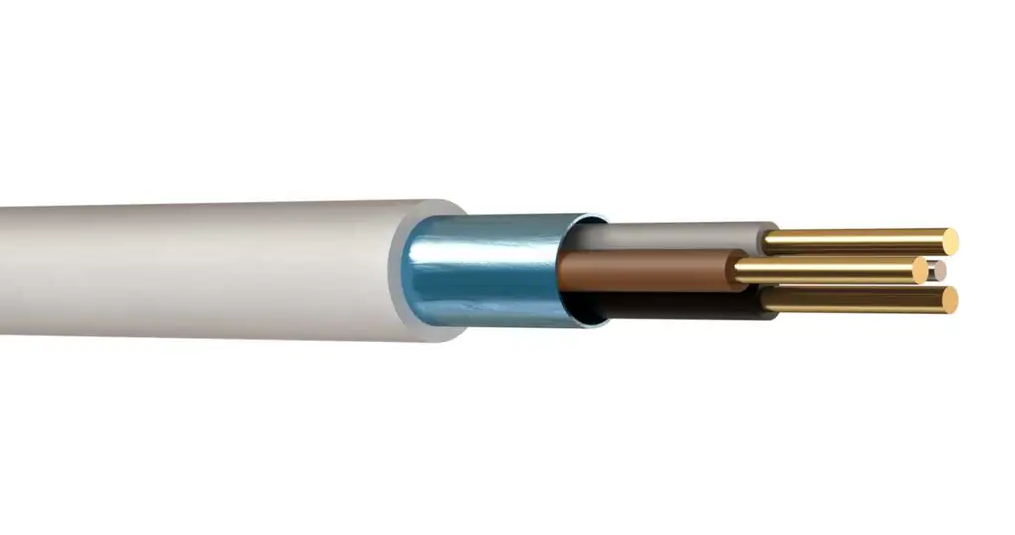
The cable that has largely replaced MICC cable for fire-critical applications is FP200 — more formally FP200 Gold, manufactured by Prysmian, though FP200 has become industry shorthand in the same way that Hoover became the generic term for vacuum cleaners.
FP200 fire resistant cable achieves the same fundamental outcome as MICC cable — a circuit that maintains integrity during a fire — through a different construction. Rather than mineral powder and a copper outer sheath, FP200 uses a layer of mica tape around the conductors, with a LSOH (Low Smoke Zero Halogen) or PVC outer sheath over the top. Mica withstands extreme temperatures without breaking down. When fire burns away the outer sheath, the mica layer holds and the circuit keeps working.
Standard terminations. FP200 terminates into standard connectors and enclosures. No specialist glands, no termination pots, no moisture seals. Any NICEIC-registered electrician can terminate FP200 correctly without specialist MICC cable training.
No moisture sensitivity. Because FP200 uses mica tape rather than hygroscopic mineral powder, there is no moisture ingress risk at terminations. The cable can be cut, jointed and extended as straightforwardly as standard cable.
Flexibility. FP200 handles like standard cable. MICC cable is rigid and must be routed with care to avoid fracturing the internal mineral insulation. FP200 routes around corners and into confined spaces without those concerns.
Lower cost. Cable cost, termination hardware and labour all come in substantially below MICC cable equivalent. On a complete fire alarm installation, the saving is material.
Full compliance. FP200 meets BS EN 50200 and complies with BS 5839 and BS 5266 — the same standards that govern fire-critical cable installation. The fire performance is equivalent to MICC cable.
If it's in good condition — leave it. MICC cable in sound condition, with strong insulation resistance test results and all terminations properly made and sealed, can continue to function correctly. It was built to last, and it does.
If insulation resistance is deteriorating — investigate. Declining insulation resistance on an MICC cable installation indicates moisture is present somewhere in the system. Depending on the scale and location of the problem, remediation may involve re-terminating affected ends or replacing cable sections.
If the system needs extending or modifying — plan carefully. Adding new devices to an existing MICC cable installation is where cost and complexity bite hardest. In many cases, running a new FP200 spur from an existing panel or zone module is more practical than extending the MICC cable run.
If it's failing significantly — replace it. When MICC cable insulation has deteriorated to a point where the system generates persistent faults, the economics of continued repair generally don't work. Replacing with FP200 fire resistant cable delivers the same fire performance and makes every future modification straightforward.
Landlords and managing agents — If your residential block was built before 1990 and you've never had the fire alarm cable infrastructure formally assessed, it's worth doing. MICC cable with deteriorating insulation is a compliance issue as well as a safety concern.
Care home managers — If your premises contain MICC cable, its condition should be part of your fire safety management review. Insulation resistance testing will tell you more than the annual alarm check alone.
Facilities managers and commercial property owners — Any MICC cable installation approaching forty or fifty years old deserves a closer look, particularly if the building has had fire alarm modifications carried out by different contractors over the years.
Churches and historic buildings — MICC cable was extensively used in churches and civic buildings across Kent from the 1950s onwards. If you're planning electrical or fire alarm work, understanding what cable you have and what condition it's in is an important first step.
We work with MICC cable installations, but they are normally replaced with the FP200 fire resistant cable and fire alarm electrical infrastructure across Tonbridge, Tunbridge Wells, Sevenoaks, Crowborough and the surrounding areas of Kent. Whether you need an assessment of an existing MICC cable system, advice on whether to repair or replace, or a specification for a new fire resistant cable installation, we'll give you a straight answer.
Bright Spark Electrical Services
01892 531 728 | karen@brightsparkelectrician.co.uk
Serving Tonbridge, Tunbridge Wells, Sevenoaks, Crowborough and surrounding areas of Kent.
Terry was very helpful, and everything has been fixed.
We are very pleased with the high standard of the recent work carried out by Bright Spark and would happily recommend the service. We were particularly impressed by the quick response to our online enquiry and the email follow up by Karen after the job had been completed. We will definitely use her for any electrical job in the future.
What is really great about Bright Spark Electrical is that they communicate well and get the job done precisely exactly as agreed and bang on time. The job is thoroughly discussed beforehand, you know who is coming and when and have a full list of the parts to be installed. They perform tasks efficiently with no mess. They have done jobs for me in Tunbridge Wells, both in the Culverden Down area and at High Brooms and I would recommend them
Karen was amazing I can not recommend her highly enough she went over and above my expectations and was indeed a bright spark to my day and helped with love ❤
After moving house I had a lot of electrical work needed doing. Bright Sparks made a very good job of it all and has left me confident in the electrics in the house. The work consisted of a new fuse box, new lights, switches and plugs etc. The work was carried out in a clean, pleasant manner. I would definitely recommend this company. Margaret C