
Where Bright Ideas
Come to Life!
Come to Life!
There's a moment most homeowners reach — usually when they're staring at a four-way extension lead plugged into another extension lead, surrounded by laptops, phone chargers, a lamp and a TV — where they think: I need more sockets. It's one of the most common jobs we get called out for, and honestly, it's one of the most satisfying. The difference a few well-placed sockets makes to how a room works is immediate and obvious.
But it's not quite as simple as picking a spot on the wall and cracking on. Whether you're replacing an old socket or adding brand new ones, there's quite a bit to consider before any work starts — and quite a lot that can catch you out if you don't know what you're looking at. This article covers both scenarios in plain language, so you know what's involved and what to expect.

Let's start with the simpler scenario: you've got a socket, it works, but you want it replaced. Maybe it's cracked, discoloured, or the faceplate is hanging off. Maybe you're redecorating and you want to update from white plastic to brushed steel. Maybe the socket is genuinely knackered — the contacts are worn, things don't feel secure when you plug in, or it's getting warm to the touch. All good reasons.
Replacing a like-for-like socket — same position, same wiring — is a straightforward job. An electrician will isolate the circuit, confirm it's dead with a voltage tester (never assume), remove the old socket, check the existing wiring is in good condition, connect it to the new socket and test it. Done. That whole process on a straightforward socket in good condition typically takes thirty to forty-five minutes.
The complication, and it's a common one in older properties, is what they find behind the old socket. In a house that hasn't been rewired since the 1950s up to the 80s, you might find the old rubber-coated wiring. That aged rubber insulation goes brittle, cracks and can crumble away when disturbed. If that's the case, simply swapping the faceplate isn't the right answer — because what you'd be doing is putting a shiny new socket on a wiring connection that isn't safe. The electrician needs to flag that, tell you what they've found, and give you options. Pushing on with a straight swap when the wiring is in that condition isn't something a responsible electrician will do.

This is also where older wiring without an earth conductor can be a problem. Some older properties have wiring that doesn't include an earth, which limits what type of socket can be fitted. In that situation, an unearth socket can be used in certain circumstances, but it needs to be considered carefully and documented correctly — it's not something to ignore.
Another common scenario: you've got a single socket and you want a double. This is a quick upgrade in most cases. If the back box (the metal or plastic box in the wall behind the socket) is surface-mounted, it's usually just a case of swapping for a deeper, wider box and fitting the double faceplate. If it's a flush fitting — set into the wall — you may need the wall chased out slightly to accommodate the new double back box, which adds a little time.
This is a different conversation entirely. You're not replacing what's there — you're adding something that doesn't currently exist. That means running new cable, which is where the real work lies.
The first question any electrician worth their time will ask is: where do you actually want the new sockets, and what for? That matters because it determines where the cable needs to run, how much cable is needed, and whether the existing circuit can safely absorb the additional load.
New sockets are almost always spur off an existing ring main or radial circuit. Think of the ring main like a loop of cable that runs from the consumer unit around the house and back again. Connecting a new socket back onto that loop is called a spur, and it's the standard method for adding sockets. The cable from the spur point runs to wherever the new socket needs to be.

The cable run is often where the cost and disruption sits. If the new socket is going next to an existing one — say, turning a single into a double, but in a different location — that's straightforward. If it needs to go on the other side of a room, through a ceiling void, or down from upstairs, the run gets longer and the work involved in chasing or threading cable through walls increases.
There are limits to how many spurs can come off a ring main, which is another reason why a qualified electrician should be designing this rather than a handyman estimating it. Adding socket after socket without thinking about circuit load is how you end up with problems down the line.
If you want the tidiest possible result — sockets sitting flush with the wall, cables hidden — the back boxes need to be set into the wall (recessed), and the cable either chased into the plaster or run through the wall cavity. That involves a bit of mess: dust, filling, redecoration. Worth knowing in advance.
If you're in a situation where chasing isn't practical — solid concrete floors, tiled rooms, older properties where you don't want to disturb the fabric of the building — surface-mounted conduit or trunking can route the cable along the surface. Not as neat, but a valid and common solution, particularly in garages, utility rooms and commercial spaces.
Adding a new circuit or extending an existing one in certain locations — kitchens, bathrooms and outdoors in particular — is notifiable work under Part P of the Building Regulations. This means it needs to be certified. All our electricians are NICEIC registered, which means we're approved contractors who can self-certify the work. You get a certificate at the end, which matters when you come to sell the property. If someone does this work without certification and you're asked for it on a house sale, you'll have a problem.
 .
.  .
.
Work in other rooms of the house — adding sockets to a living room or bedroom, for example — doesn't typically require Part P notification, but it still needs to meet the current wiring regulations (BS 7671) and be carried out competently.
Once you've decided you need more sockets, it's worth knowing what's available — because a straight single or double socket isn't the only choice anymore.
Double sockets are the obvious standard, and for most situations they're still the right answer. Two outlets, reliable, simple.
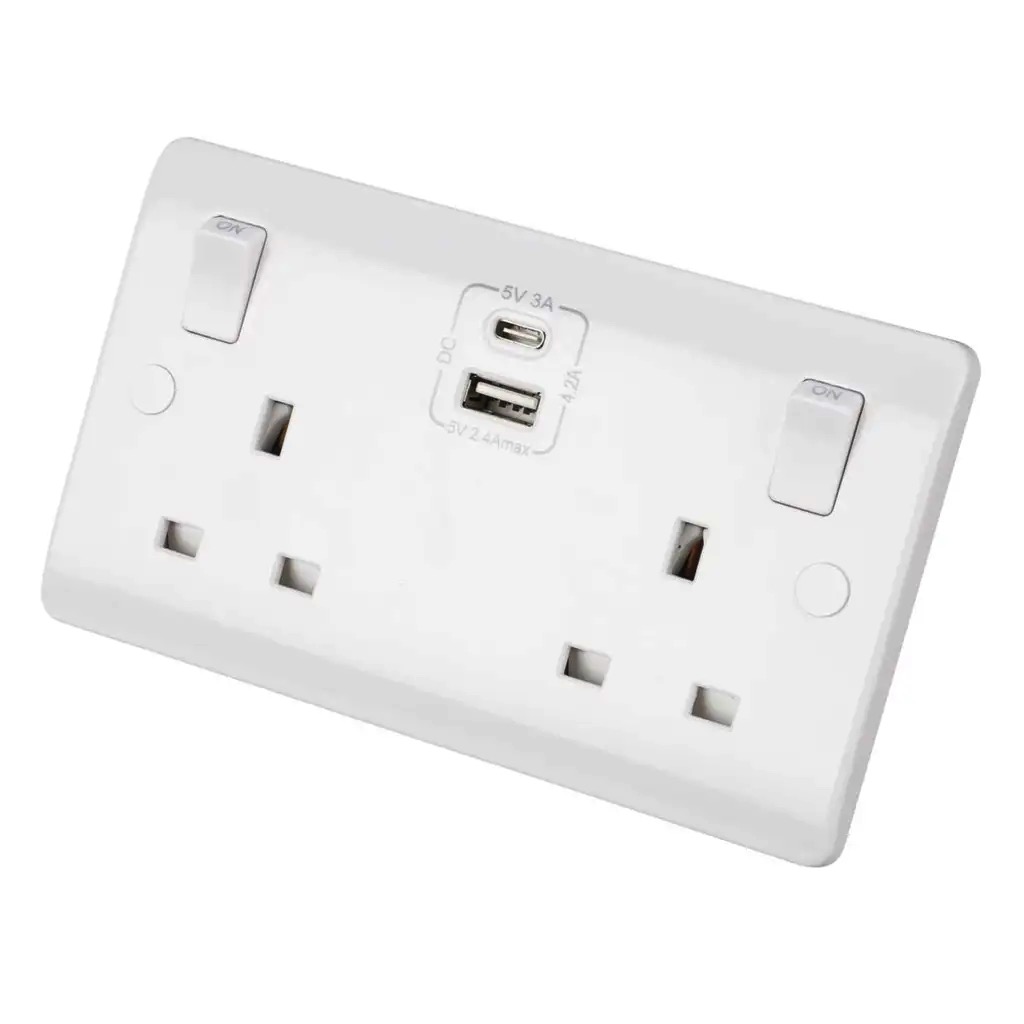
USB sockets combine traditional plug sockets with USB charging ports built into the faceplate. These are very popular for bedrooms, home offices and kitchens — anywhere phones, tablets and other devices are regularly charged. You don't lose a socket to a USB charger cube. Worth noting that USB technology moves fast, so you want to make sure you're specifying the right type: USB-A is the older standard, USB-C is the current one and where most devices are now headed.
Floor sockets are increasingly popular in larger living rooms and open-plan spaces where you don't want cables trailing across the room from wall sockets. They sit flush with the floor and pop up when needed. The installation is more involved — the cable run has to work with the floor construction — but the result is clean and practical.
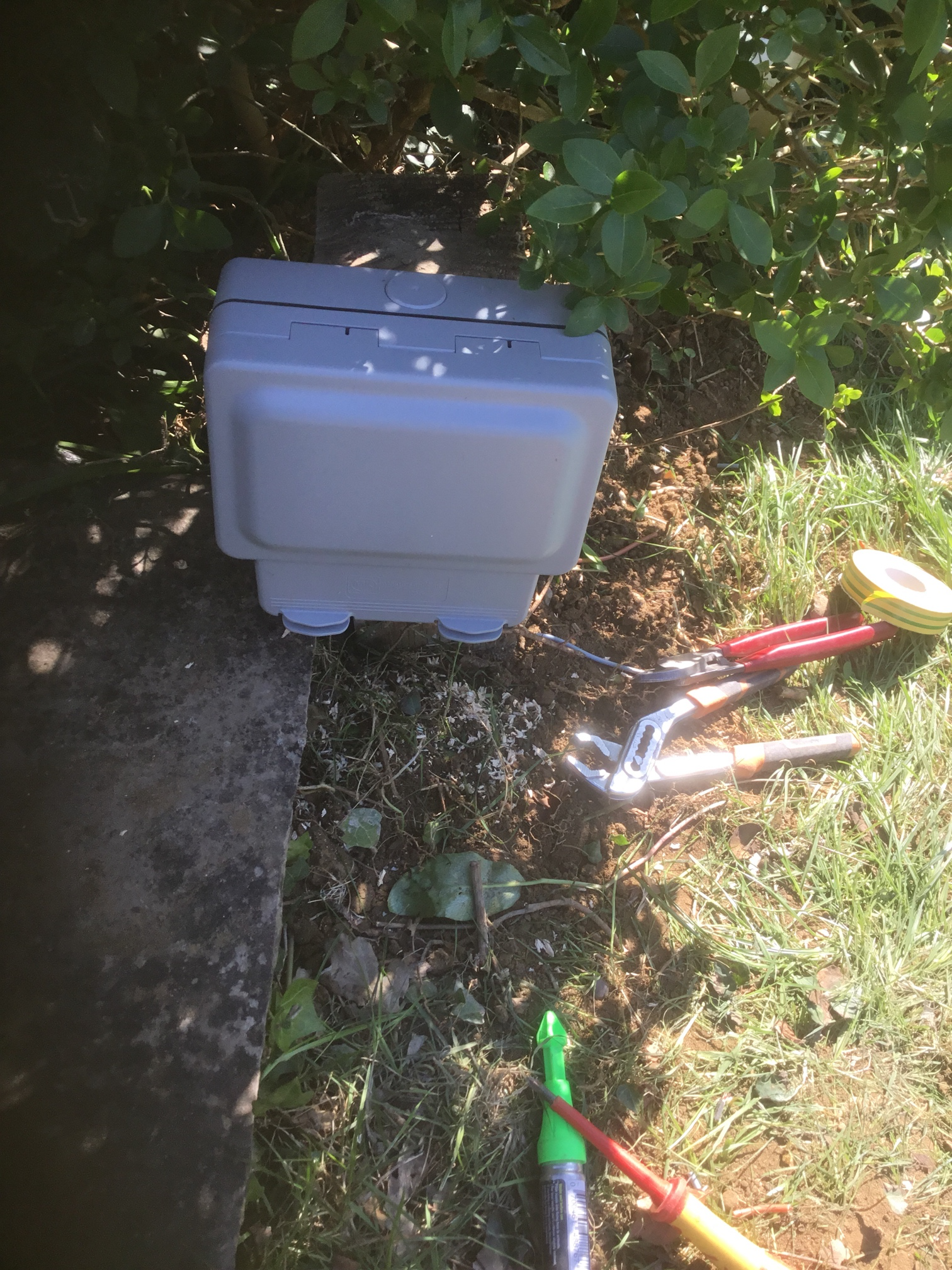
Outdoor sockets are a separate category entirely. Any socket fitted outside needs to be rated for outdoor use (weatherproof), positioned correctly, and protected by an RCD. These aren't something to improvise with — outdoor sockets have specific requirements and the consequences of getting it wrong are serious. If you're thinking about garden sockets, read our dedicated article on that.
Shaver sockets for bathrooms are another specific category. You cannot fit a standard socket in a bathroom — the regulations around electrical installations in rooms containing a bath or shower are strict, and for good reason. A shaver socket is a low-current, isolated unit designed specifically for that environment.
Separate from adding new ones, it's worth knowing when existing sockets are telling you something's wrong.
Warmth on the faceplate is a warning sign. A socket should never be warm to the touch — it suggests a loose connection or overloading, both of which can cause problems. A socket that's discoloured, scorched or smells of burning is a more urgent warning sign and should be looked at immediately.
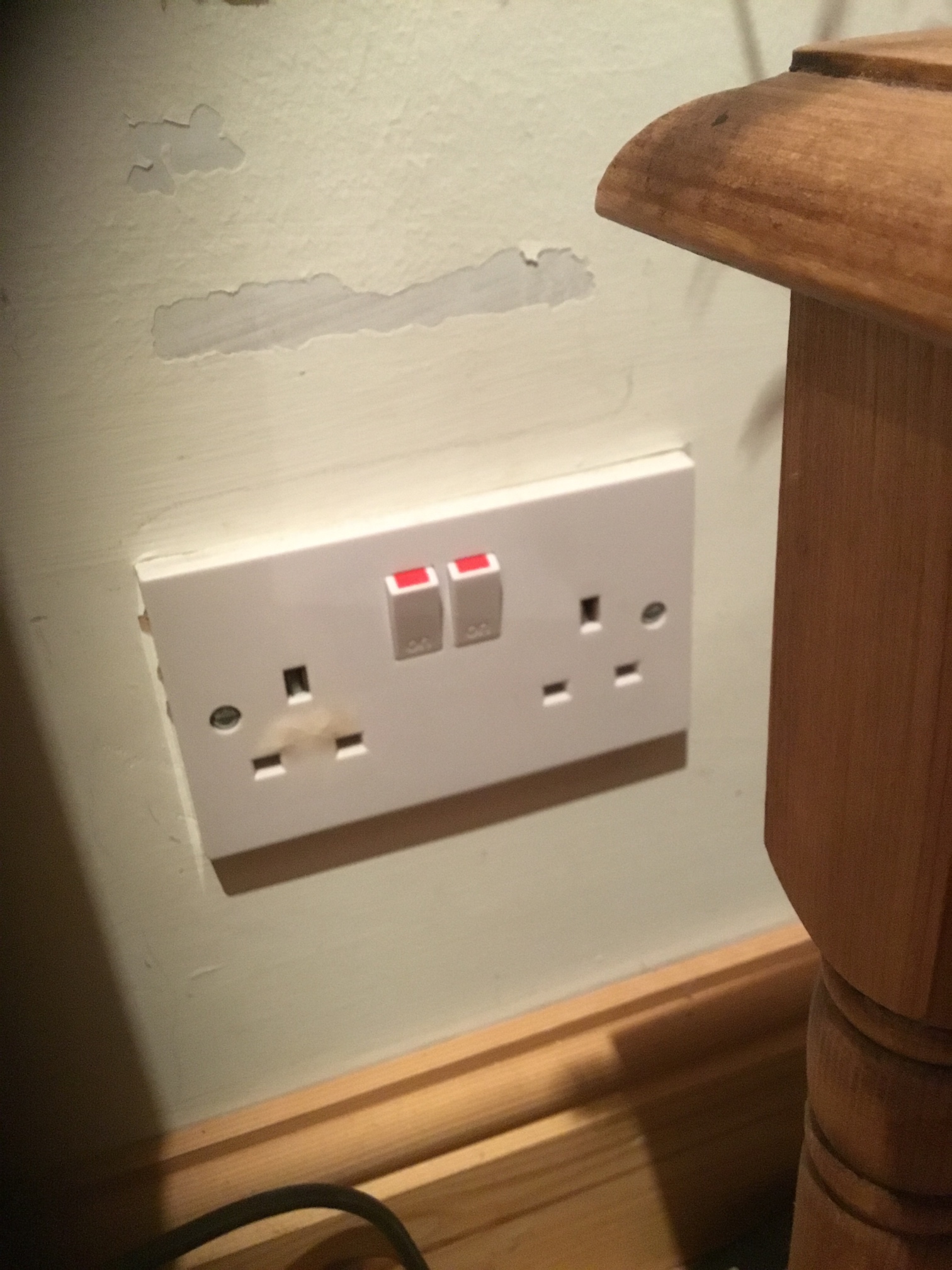
Sockets that feel loose, where the plug doesn't sit securely, or where you can wiggle the whole faceplate, are a sign that the fitting has degraded or the mounting screws have worked loose. Not always dangerous in isolation, but worth sorting.
If a socket repeatedly trips the circuit breaker when something is plugged in, that's a circuit problem — either the circuit is overloaded, the socket wiring has a fault, or the appliance is the problem. Worth investigating rather than ignoring.
Old round-pin sockets are a clear indicator that the installation hasn't been updated for a long time. If you have those, the wiring behind them is likely to be in a similar era — and an EICR (Electrical Installation Condition Report) would be a sensible starting point to understand the overall state of the installation.
We get asked this a lot, and the honest answer is that it varies — mainly because the cable run is where time and cost sit. A like-for-like socket replacement is typically a quick job. Adding a new socket that's close to an existing circuit connection point, in a room where the cable can be chased in without much disruption, is also relatively modest. Once you're running cable across larger distances, through ceiling voids, or dealing with complications behind the wall, the time increases.
We publish fixed prices for common jobs on our Rates & Fixed Prices page, and for anything more bespoke, we'll give you a clear quote before any work starts.
One thing we consistently see is that socket work reveals the condition of the wiring behind it. That's not a reason to put it off — it's actually a reason to get it done. You learn something. If everything behind the wall is in good shape, great. If it isn't, you're better off knowing.
If you're in an older property and this is the first time an electrician has been in to look at the sockets in a long time, it may be worth having an EICR carried out at the same time — that gives you a full picture of the installation's condition, which is useful whether you're planning more work or just want peace of mind.
For anything socket-related — replacements, additions, or you're simply not sure what you've got — give us a call on 01892 531 728 or get in touch through the website. (link on the bottom of this page) We cover Tonbridge, Tunbridge Wells, Sevenoaks, Crowborough + surrounding areas, and we're always happy to have a straightforward conversation about what's involved before any commitment is made.
Bright Spark Electrical Services — NICEIC registered electricians serving Kent and the surrounding area.

We found the service to be friendly and pro-active. We had an appointment quickly and the engineer was able to find the issue, which was not straightforward, within an hour and rewire the effected ceiling lamp and resolve the issue completely within 2 hours. Very methodical and accurate working - most appreciated!
You just saved us the biggest headache ever; after months of electrical problems ( now resolved), we had a ‘no power situation’. After checking circuit boards, switches etc we were at a complete loss. Read your piece above (after Googling ‘circuit board switches up, but no power‘) about RCD switch and resetting (didn’t know what an RCD was), and after 8 hours sleep dreaming of circuit boards and 2 minutes of contemplation, and re-reading your advice,I totally nailed it. Brilliant tutorial, many thanks. Susanne (I am neither young nor savvy with anything technical)
I’d like to say a huge thank you Karen, to you & your team for providing the excellent service you do. Always there when we have an issue or just routine work needs to be carried out. It’s so reassuring that we can rely on you at any time, even for advice. Always professional, knowledgeable & particularly personable Superb…
We were very pleased with the recent electrical work which was carried out in a professional manner by your electrician and will certainly use your company again when future needs arise. Also I would be happy to recommend your services to any of our friends.
I was very pleased with the quick response and the job was successfully done by a nice Tradesman the cost was competitive And will call this company to carry out any further work.