Where Bright Ideas
Come to Life!
Come to Life!
The fuse is designed to protect your equipment/appliance and also you in the case of an overload due to a mechanical or an electrical fault.
Be warned, if you are tempted to use something like a paperclip or piece of tinfoil wrapped around an old fuse or a nail, don’t. It is extremely dangerous and could result in electrocution, a fire or total failure of your appliance.
In the UK, the majority of domestic appliances can stay with a pre-fitted moulded plug. The plugs have either a 3 amp or a 13 amp rated fuse - It is very rare that you find anything inbetween although there are other fuses available. The plug with its fuse for the appliance make the minimum protection required for your piece of equipment/appliance. An incorrect fuse however will continually blow if it is incorrectly rated or fail to protect your equipment from a catastrophic meltdown if it is too high.
If you have a plug embossed on the fuse carrier on your plug, there will be the fuse rating for your appliance. I.e. 13 A or 3 A.
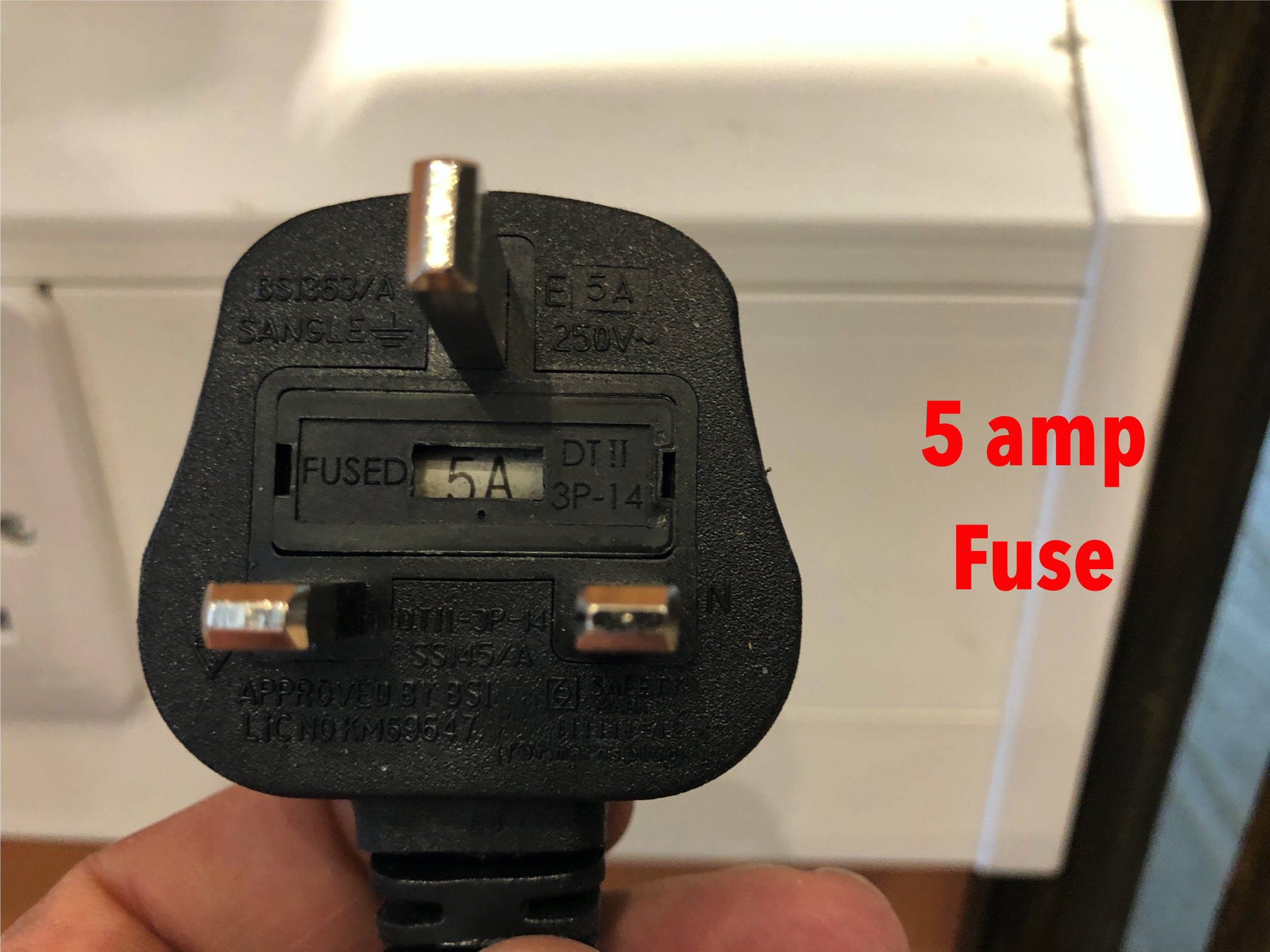

A mains plug takes a 25.4 mm (1.25 inch) BS 1362 fuse, these fuses are available from any local supermarket or DIY store. They are cheap so don’t risk stealing a fuse from another appliance just to get your appliance going, unless you are using a fuse of the same rating.
"I have a pre-fitted moulded plug on my appliance and there is no fuse? I have no idea what type or fuse rating I require!"
Let’s do some calculations -
In the UK, the mains voltage is generally 240 Volts. Look at the appliance ID plate which can be found on the base of the appliance or on the back. It will advise the wattage, the voltage, the hertz – Hz (frequency) and potentially the amperage required as well.
The simple calculation is watts divided by volts equals amps. After you have calculated this, it is a simple case of adding around 10% to the value and choosing the nearest fuse to match. This is a more precise method then just guessing should you require a 3, 5, or even 13 amp fuse. Replacing the incorrect fuse with the correct one will avoid the risk of you blowing the fuse.
If you have a training lead such as a 4-gang socket or more extension lead, this will only be rated to maximum of 13 amp. Overloading one of these becomes apparent when the total amperage of the appliances plugged in exceeds the 13 amp in this extension lead.
The majority of the time there is no identification plate on the table lamp, however we know that the maximum lightbulb wattage is going to be 100 W, so the calculation would be:
100 Watts divided by 240 Volts equals 0.42 amps +10% which equals 0.46 Amps.
100 / 240 = 0.42 amps + 10% = 0.46amps
So from this calculation the ideal fuse would be 1 amp. However most manufacturers put a 3 amp fuse in the plug as standard.
As modern day living has progressed and technology improves, lightbulbs are changing over to LED. A lot of the LED lightbulbs are 5 W (that’s one 20th of a hundred watt lightbulb) so a calculation for this would be:
5 W divided by 240 V equals 0.02 amp which equals 0.022 amp.
5 / 240 = 0.02 amps + 10% = 0.0.022 amps
So from this calculation the ideal fuse would be the one amp fuse, but again, most manufacturers will have put in a three amp fuse.
Kettles have a wide range of wattages depending on if it is a slow boiling kettle, or a rapid boiling kettle.
A typical identification plate which can be found on the base of the kettle could show the following information 220–240 Volts – 50 Hz 1850 to 2200 Watts the ID plate shows that this is a kettle that is suitable for Europe 220 V (1850 Watts) and the UK 240 Volts (2200 Watts). The 50 Hz is a frequency and is not required for the calculation.
The calculation would be 2200 Watts divided by 240 Volts equalling 9.17 A +10% which equals 10.087 amp. So from this calculation the ideal fuse would be a fuse of around 10 A amp.
2200 / 240 = 9.17 amps + 10% = 10.087 amps
However a 13 amp fuse would be fitted as standard into the plug by the manufacturer, any fuse lower than even the 10 amp would fail.
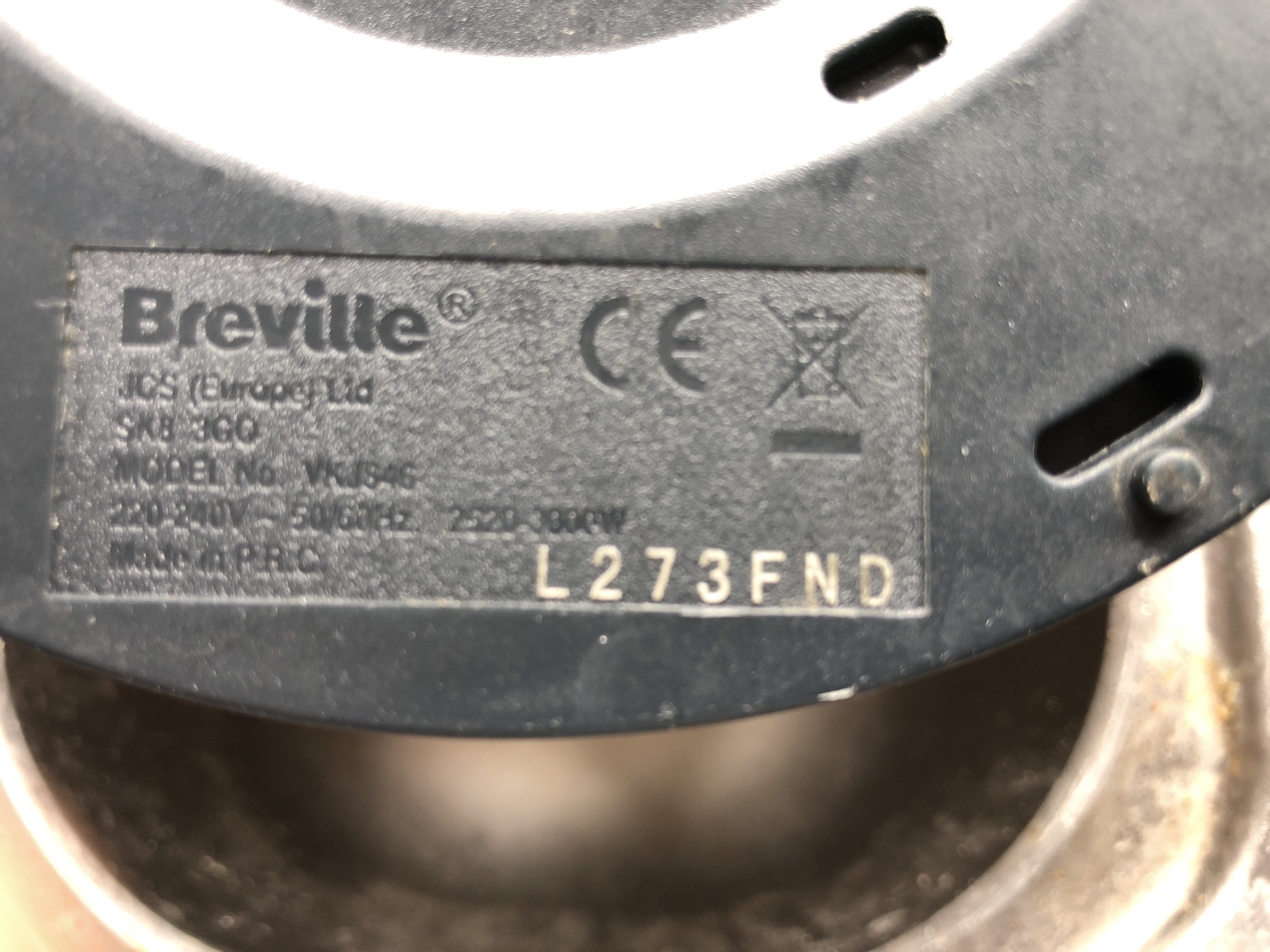
If the appliance shows 60 Hz, then this appliance is not suitable for use within the UK. If the appliance shows 50–60 Hz it is suitable for the dual use (Europe/UK).
Set out below is a grid which will give you an indication as to which fuse rating will typically be used within your appliance.
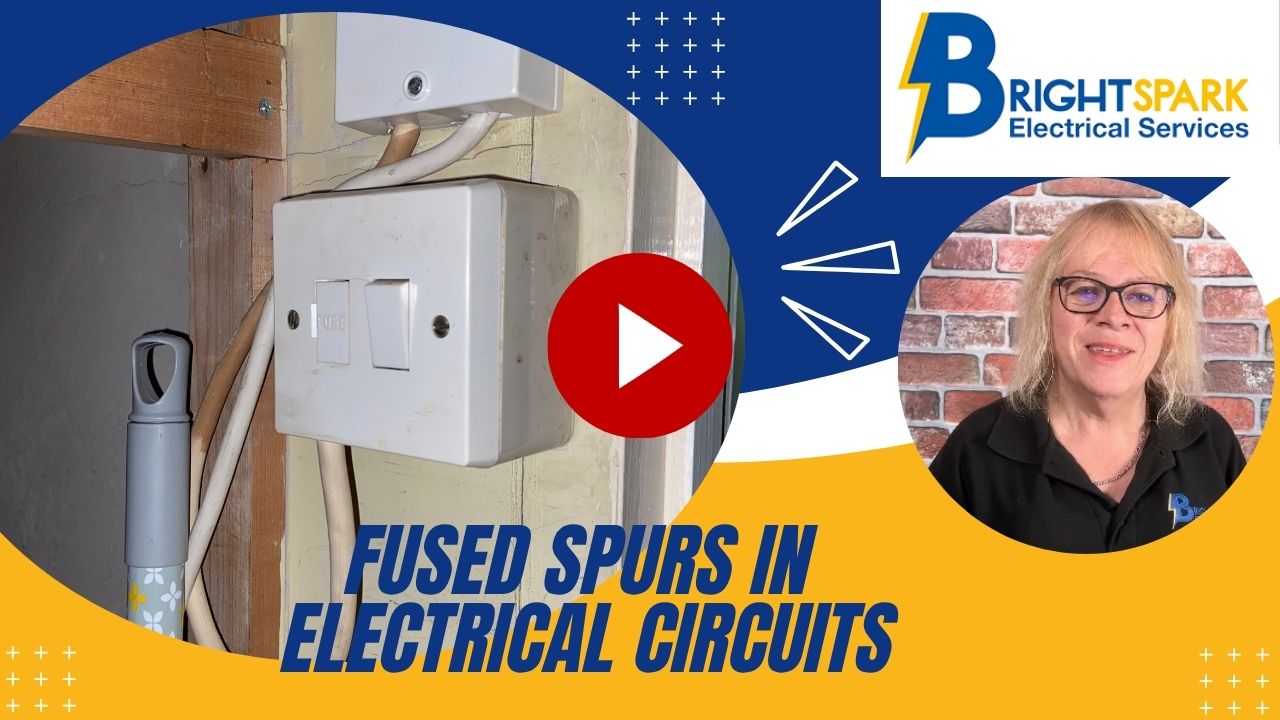
If you have had a new kitchen fitted for example, you may find that you have a fuse spur above the worktop beside or close to a socket outlet. The fuse spur then fades down and isolates the appliance below so you do not have to uplug it should there be an appliance failiure (there is a chance you could be electricuted just pulling the socket out). As all appliances are supplied with a moulded plug, the warranty can be infringed if you cut off the plug.
Generally in this instance you will be having a 13 amp fuse in the fuse spur, feeding down to a 13 amp fuse in your plug,.
If you find that you have a three amp fuse in the fuse spur feeding down to your appliance, and using the calculations above, you have a requirement for 13 amp fuse, then the fuse in the fuse spur needs to be upgraded to the 13 amp fuse.

In other instances, where an electrician may have found that there is no lighting circuit cables to the area where customers require lights, a fuse spur may have been introduced to feed the new lighting circuit. This fuse spur might have a three amp or a five amp fuse in it depending on the amount of lights within the circuit. You will typically find this when there has been an extension such as a conservatory, or you have installed garden lighting.
For more information, or immediate Help Give us a Call on 01892 531728 which is active 24/7.
Alternatively fill out our web enquiry form, and we will respond quickly.
‘Excellent service, quick and very efficient. Tidy work. No problem recommending Karen and her team. Will definitely use these guys again!’
I was very pleased with the prompt and efficient service. The electrician phoned in advance to confirm his time of arrival and was friendly and polite.
What is really great about Bright Spark Electrical is that they communicate well and get the job done precisely exactly as agreed and bang on time. The job is thoroughly discussed beforehand, you know who is coming and when and have a full list of the parts to be installed. They perform tasks efficiently with no mess. They have done jobs for me in Tunbridge Wells, both in the Culverden Down area and at High Brooms and I would recommend them
I had no electricity and phoned up in very late evening. Karen phoned me back despite it being late evening and sorted out my problem on the phone . Great service, extremely helpful and quick response and I didn’t even have to pay for a visit. Thoroughly recommend this company and will definitely use them again.
I was really impressed with the work done for me by Bright Sparks. It is lovely that they are local to me in Hildenborough and grateful that they could fit me in at short notice. The repairs were done quickly and easily by Charlie and the whole thing coordinated by Karen who kept me informed every step of the way. Well done Bright Sparks!